Marathon Training Methodology
18 months from detrained to running a marathon.
Client had a history in her 20s of long-distance, including her longest run of a half-marathon. Client had injury history, including ACL tear with reconstructive surgery, as well as ongoing IT band issues.
Client, now 39 years old and 2 years post-childbirth birth expressed interest in completing a full marathon as a long-distance goal along side common training goals. Client had done minimal training since childbirth and had yet to resume running.
Our initial 3 months of training were rehabilitation for functional movements as well as rebuilding foundational muscle and strength. After a foundation was established, we set our first milestone of a half-marathon for the end of September (3months from that point and about 6 months into training).
The next 3 odd months included a reintroduction to running in her programming; this ramped up in accordance with her strength training, and FST began to be used to mitigate the risk of injury. In September 2024 client completed her half-marathon and her goal shifted to running her first-ever full marathon.
Client had a consistent problem when training for long distances; she was unable to train for and complete races without dealing with setbacks from injuries. Her half-marathon was the first time that she was able to complete the process with no setbacks. With this in mind, we set the date of her full marathon for October 2025 to give adequate time to prepare.
Two time per week weight training alongside 1 ramping running session per week was the protocol for the first 8 months of full marathon prep. This also included bi-weekly FST sessions to help mitigate soreness as well as injury risk.
As the date of the marathon came closer intensity of training declined to accommodate the increase in weekly running, FST sessions also moved from bi-weekly to nearly weekly to prioritize recovery and injury mitigation.
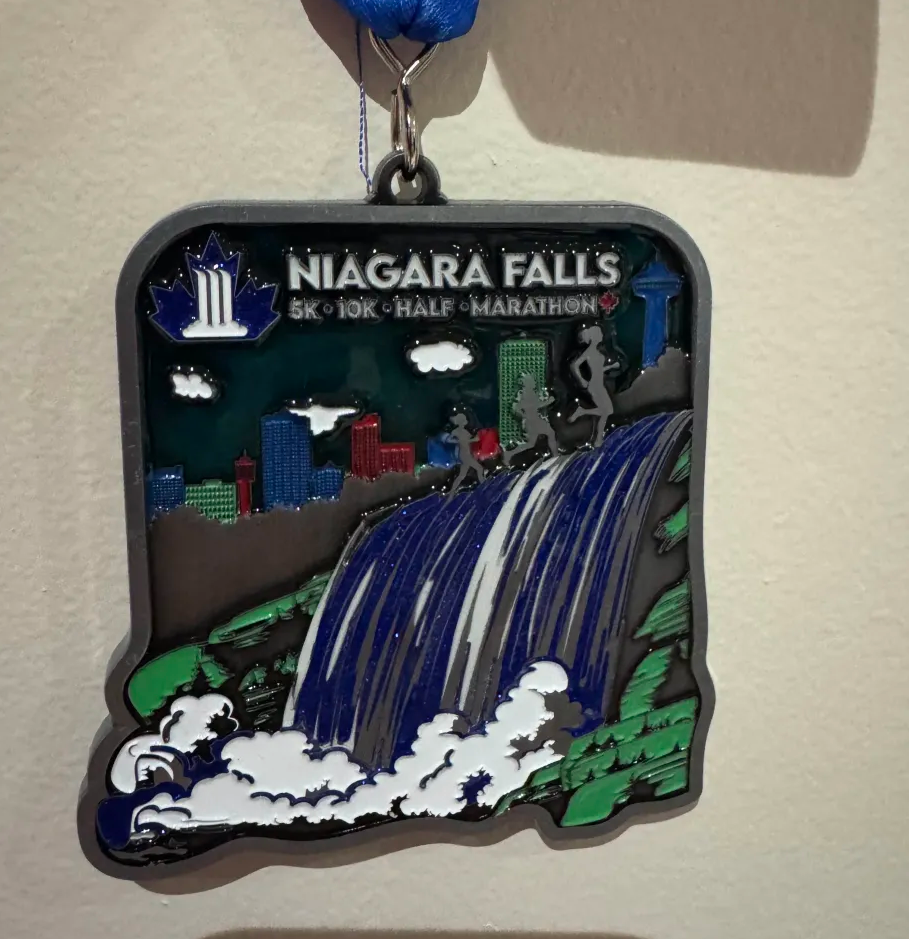
This continued until about 2 weeks before the marathon, client did her final 40km prep run and two time per week FST sessions were added as training was paused to help her fully recover for the race. Client completed her full marathon in 2x the time it took her to complete her half marathon. Initial goal 18 months prior was achieved and two weeks after the race, we sat down to set her next milestone to aim towards.
Client Considerations
Client successes and effort that played a substantial role in her success.
Session frequency & consistency
Discipline outside of training sessions
Maintaining a positive mindset during small setbacks
Consistent personal tracking of running paces & nutrition
Familial support and motivation
Client Feedback
Foundational Training
Tom was instrumental in helping me regain my strength and endurance after spending four months on full bed rest during pregnancy. Although I had a solid foundation in youth and amateur athletics, I quickly realized that my post-baby body required a completely different approach. Tom guided me through rebuilding both strength and stability in a way that respected where I was starting from while reigniting my athletic confidence.
Mindset Marathon
Training and racing are as much mental as they are physical—you need to stay focused and motivated for hours, far beyond the length of a typical game or workout. Tom helped me develop a repertoire of positive self-talk techniques that kept my mind sharp and engaged throughout training and on race day. Thanks to him, I never once felt bored or mentally checked out, even during the longest runs.
In-Race Aids
Because the marathon is such a long endurance event, Tom helped me master in-race preparation and fueling—something I’d never needed before. Together, we created a fueling schedule, explored different products and timing strategies, and identified signs of under-fueling. He also helped me optimize my running app and select music that complemented my pace and personality. As a former student athlete used to training in silence, this was a surprisingly effective new tool.
Nutrition
Nutrition was one of the biggest breakthroughs under Tom’s guidance. Having previously only run half marathons, I’d never had to plan detailed pre-race fueling before. Tom helped me understand my body’s carbohydrate and hydration needs, then tailored my nutrition plan to support full-distance training. These adjustments made a significant difference in both performance and recovery.
Race
Planning With a toddler at home, following a traditional marathon training plan wasn’t realistic. Tom worked with me to prioritize the most impactful sessions and release what wasn’t essential. Having someone to strategize with made all the difference—especially after tough runs, when he helped me interpret what my body was communicating and use those insights to improve my next performance.
FST (Fascial Stretch Therapy)
Having access to both training and FST in one place was a game changer. Every time I increased my distance or speed, Tom incorporated full or partial FST sessions to aid recovery and mobility. As someone prone to injury, I had previously experienced setbacks with every other running program—even from big-name coaches. This integrated approach kept me healthy, balanced, and ultimately able to complete my marathon injury-free.
Contact Me
Tom@CatalystHC.ca
(289)983-1844
Wilson Drive
Milton, Ontario